Have you ever opened your eyes in the morning, ready to start the day, only to be greeted by a sharp pain or immobility in your upper body? You are not alone. A common question echoing in clinics and online forums is: “Why do I wake up with a stiff neck and back?” This frustrating condition can set a negative tone for your entire day, affecting your mood, productivity, and overall well-being. While it is easy to blame “sleeping funny,” the reality is often a combination of your sleep environment, daily habits, and underlying physiological factors. This article will delve into the root causes and provide actionable solutions to help you wake up refreshed and pain-free.
The impact of sleeping positions
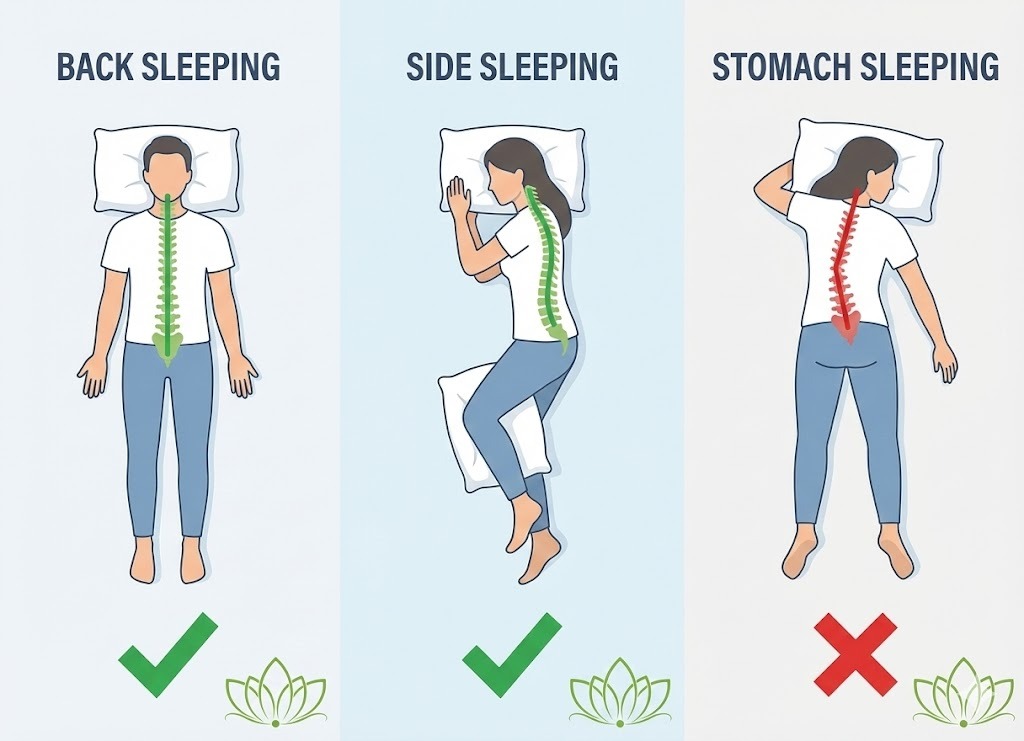
Your body remains relatively static for hours while you sleep. Therefore, the alignment of your spine during this time is the most critical factor in preventing morning stiffness.
Stomach sleeping risks
Sleeping on your stomach is widely considered the worst position for your spine. To breathe, you must turn your head to one side, which twists the cervical spine at a sharp angle for hours. This places immense strain on the neck muscles and ligaments. If you constantly wonder “Why do I wake up with a stiff neck and back?”, this habit is likely the primary culprit. It creates an unnatural arch in the lower back, compressing the lumbar vertebrae.
Side sleeping alignment
Side sleeping is popular, but it requires precision. If your head is not properly supported, it can tilt down towards the mattress or crane upwards, misaligning the cervical spine. Furthermore, without a pillow between the knees, the top leg can pull the pelvis forward, twisting the lower back. Maintaining a neutral spine—where the ear, shoulder, and hip are aligned—is essential for side sleepers to avoid waking up in pain.
Back sleeping support
Sleeping on your back is generally the best option for spinal alignment, as it allows gravity to keep the body centered. However, it is not without pitfalls. If your pillow is too high, it pushes the head forward, straining the neck flexors. Conversely, a mattress that is too soft can cause the hips to sink, straining the lower back. Proper support under the knees and neck is vital for this position to be effective.
Mattress and pillow quality
Even with perfect posture, your sleep equipment can sabotage your comfort. Your bed should be a sanctuary of support, not a source of stress.
Pillow height matters
The “loft” or height of your pillow must match your sleeping style. Side sleepers need a thicker pillow to fill the gap between the ear and the mattress. Back sleepers need a thinner one to keep the head level. Using a pillow that is too old or flattened forces the neck muscles to work overtime to support the head. This constant micro-exertion is a frequent answer to “Why do I wake up with a stiff neck and back?”.
Mattress firmness check
A mattress that is too soft causes your body to sink into a “hammock” shape, bending the spine unnaturally. A mattress that is too firm pushes against pressure points, forcing the spine out of alignment. The ideal firmness depends on your weight and sleep position, but generally, a medium-firm surface offers the best balance of contouring and support for the majority of people suffering from back pain.
When to replace bedding
Pillows and mattresses have a lifespan. A typical pillow loses its structural integrity after 18-24 months, while a mattress may last 7-10 years. If your bedding is sagging, lumpy, or no longer rebounds when pressed, it has lost its ability to support your skeletal structure. Continuing to sleep on worn-out gear guarantees morning stiffness and chronic aches.
Lifestyle and health factors
Sometimes, the cause of your pain originates from what you do during the day, manifesting only after your body tries to relax at night.
Daytime posture effects
“Tech neck” and slouching at your desk do not just hurt you during the day; the inflammation carries over into your sleep. If you spend eight hours hunching over a computer, your pectoral muscles tighten and your upper back muscles overstretch. When you lie down, these imbalances prevent your muscles from fully relaxing. This accumulated tension is a major reason why you might ask, “Why do I wake up with a stiff neck and back?”
Stress and tension
Psychological stress causes physical reactions. Many people unconsciously carry stress in their trapezius and jaw muscles. During sleep, this can manifest as teeth grinding (bruxism) or elevated shoulder tension. This state of hyper-contraction prevents deep restorative sleep and leaves muscles feeling bruised and stiff upon waking. Managing stress through meditation or winding-down routines is crucial.
Dehydration impact
The discs between your vertebrae are largely composed of water. During the day, gravity compresses these discs, squeezing water out. At night, they rehydrate and expand. If you are chronically dehydrated, your discs cannot fully recover their cushioning volume. This lack of hydration reduces spinal flexibility and shock absorption, leading to that distinct “rusty hinge” feeling in the morning.
Prevention and morning relief
If you wake up in pain, you need immediate strategies to loosen up, followed by long-term habits to prevent recurrence.
Morning stretching routine
Do not jump out of bed immediately. Spend two minutes doing gentle movements while still lying down. Bring your knees to your chest to stretch the lower back, and gently turn your head side to side. Once up, perform shoulder rolls and gentle neck tilts. This increases blood flow to the cold muscles, reducing the sensation of stiffness and preparing your body for movement.
Heat therapy application
If the stiffness is severe, heat is your best friend. A hot shower or a heating pad applied to the neck and back for 10-15 minutes can relax tight muscles and improve circulation. Heat therapy helps to soothe the nerve endings and reduce the pain signals sent to the brain. Incorporating this into your morning routine can significantly improve mobility.
Conclusion
The mystery of “Why do I wake up with a stiff neck and back?” is usually solved by examining the trifecta of sleep position, bedding quality, and daily habits. By transitioning away from stomach sleeping, investing in a supportive pillow, and managing daytime posture, you can transform your mornings from a painful struggle into a refreshing start. Remember that your body is a complex system; treating it with care during the day is just as important as how you rest at night. Start making these changes tonight, and wake up to a better, pain-free tomorrow.
Contact Information:
Art Spa
Our Branches
Art Spa 1 – 37 Nguyen Phuc Tan St., Hoi An, Quang Nam
Art Spa 2 – 37/6 Le Quy Don St., Hoi An, Quang Nam
Email: artspahoian@gmail.com
Hotline: 0906 488 820
Website: Artspahoian.com
Opening hours: 10 AM – 10 PM