Learning how to do an organic herbal hair wash at home is a transformative step towards embracing a chemical-free lifestyle. In an era where commercial shampoos are laden with sulfates, parabens, and synthetic fragrances that strip natural oils, turning to nature offers a gentle yet effective alternative. Ancient traditions, particularly Ayurveda, have long utilized the power of herbs to maintain lustrous, strong, and healthy hair. This guide will walk you through the process of creating your own nutrient-rich cleanser using simple ingredients found in nature, helping you restore your hair’s natural vitality and shine.
Benefits of herbal hair wash
Before diving into the recipe, it is essential to understand why this traditional method surpasses modern conveniences in promoting long-term hair health.
Chemical-free cleansing
The primary advantage is the total absence of harsh chemicals. Commercial shampoos often disrupt the scalp’s pH balance, leading to dryness, dandruff, or excessive oil production as a rebound effect. An herbal wash cleanses without stripping. When you discover how to do an organic herbal hair wash at home, you are choosing a mild surfactant (like saponins in soapnuts) that removes dirt while keeping the protective acid mantle of your scalp intact.
Nourishment from roots
Herbal ingredients are not just cleaners; they are food for your hair. They are packed with vitamins, antioxidants, and micronutrients that penetrate the follicles. This direct nourishment strengthens the hair shaft from the inside out, reducing breakage and split ends. Unlike synthetic conditioners that merely coat the hair with silicone, herbs improve the actual texture and quality of the strands over time.
Promoting hair growth
Many herbs used in these washes have specific properties that stimulate blood circulation to the scalp. Improved circulation means more oxygen and nutrients reach the hair roots, potentially waking up dormant follicles. Regular use can lead to thicker, denser hair growth and a significant reduction in hair fall, addressing common concerns that expensive treatments often fail to fix.
Essential ingredients checklist
The magic lies in the blend. You will need a specific combination of dried herbs, which are readily available at organic stores or online herbal shops.
Soapnuts (Reetha) base
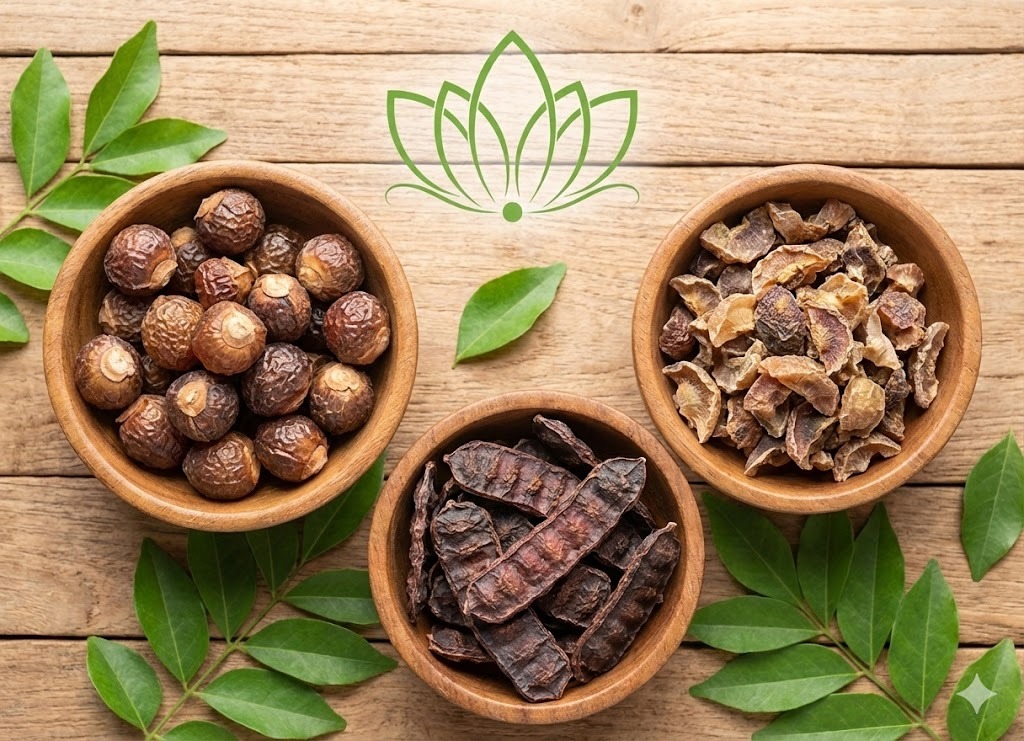
Reetha is the backbone of your natural shampoo. The shells of these nuts contain saponin, a natural cleansing agent that creates a mild lather when agitated in water. It is excellent for removing oil and grime. Without Reetha, your mixture would lack the cleansing power necessary to leave your scalp feeling fresh. It is the natural alternative to sodium lauryl sulfate.
Shikakai for softness
Shikakai, literally translating to “fruit for hair,” is a natural conditioner. It has a low pH, which acts as a detangler and leaves hair incredibly soft and manageable without the need for additional conditioners. It is also rich in Vitamin C and D, making it vital for maintaining scalp health. Including Shikakai ensures your hair does not become dry or brittle after washing.
Amla for strength
Amla (Indian Gooseberry) is a powerhouse of antioxidants and Vitamin C. It strengthens the roots, prevents premature graying, and adds a deep, natural shine to the hair. It also acts as a natural preservative for your herbal mixture. When learning how to do an organic herbal hair wash at home, Amla is the secret ingredient for longevity and resilience of your hair strands.
Fenugreek seeds boost
Fenugreek (Methi) seeds are mucilaginous, meaning they become slippery when soaked. This property adds “slip” to your herbal wash, making it easier to apply and rinse out. Furthermore, fenugreek is potent in treating dandruff and soothing an itchy, irritated scalp. It adds a final touch of hydration and shine to the formula.
Step-by-step preparation guide
Creating your own shampoo requires a bit of planning, but the process is straightforward and deeply rewarding.
Soaking the herbs
Take a handful of Reetha (about 5-6 shells without seeds), a handful of Shikakai pods, a few pieces of dried Amla, and a tablespoon of Fenugreek seeds. Place them all in a large bowl (iron vessels are traditional and preferred for darkening hair). Add about 3-4 cups of water and let them soak overnight. This long soaking period softens the tough dried ingredients and allows the nutrients to leach into the water.
Boiling the mixture
The next morning, transfer the water and herbs into a pot. Bring the mixture to a boil, then lower the heat and let it simmer for about 15 to 20 minutes. You will notice the water turning dark brown and slightly frothy. This heat extraction process ensures that all the saponins and beneficial compounds are fully released. Be careful not to let it boil over, as the natural foam can rise quickly.
Straining and cooling
Once boiled, turn off the heat and let the mixture cool down completely. Once cool, use your clean hands to mash the softened herbs in the water to extract the pulp and juices. This is a crucial step to get the maximum potency. Finally, strain the liquid through a fine muslin cloth or a sieve into a clean bottle or jar. Your organic herbal shampoo is now ready for use.
Application and washing routine
Using herbal wash is different from using gel-based shampoos. It does not lather as much, but it cleans just as effectively.
Massaging the scalp
Wet your hair thoroughly. Pour the herbal liquid slowly over your scalp, focusing on the roots rather than the lengths. Use your fingertips to gently massage the liquid into your scalp in circular motions. This mechanical action helps lift dirt and oil. Do not expect a mountain of foam; rely on the massage to ensure the cleanser reaches every part of your scalp.
Rinsing thoroughly
Leave the mixture on for about 5 minutes to let the nutrients absorb. Then, rinse your hair with plain, cool or lukewarm water. It might take a bit more water than usual to wash out any tiny herbal particles. Ensure the water runs clear. Mastering how to do an organic herbal hair wash at home involves patience during this rinsing phase to avoid any residue.
Post-wash care tips
After washing, you may not need a conditioner as the herbs are naturally conditioning. However, if you have very dry hair, you can apply a few drops of argan or coconut oil to the damp ends. Let your hair air dry to see the true texture. You will likely notice your hair feels lighter, voluminous, and cleaner for longer compared to chemical washes.
Conclusion
Mastering how to do an organic herbal hair wash at home is an empowering journey toward self-sufficiency and health. By harnessing the raw power of Reetha, Shikakai, and Amla, you provide your hair with the gentle care it deserves, free from the harsh stripping of industrial chemicals. While it requires more effort than squeezing a bottle, the reward is stronger, shinier, and healthier hair that thrives naturally. Start this ritual this weekend, and experience the profound difference that nature’s ingredients can make to your beauty routine.
Contact Information:
Art Spa
Our Branches
Art Spa 1 – 37 Nguyen Phuc Tan St., Hoi An, Quang Nam
Art Spa 2 – 37/6 Le Quy Don St., Hoi An, Quang Nam
Email: artspahoian@gmail.com
Hotline: 0906 488 820
Website: Artspahoian.com
Opening hours: 10 AM – 10 PM