Understanding the Difference between muscle fatigue and joint inflammation is crucial for anyone who leads an active lifestyle or suffers from chronic pain. Whether you are an athlete pushing your limits or an office worker dealing with daily stiffness, misdiagnosing the source of your discomfort can lead to ineffective treatments and prolonged recovery times. While both conditions manifest as physical pain and limited mobility, their biological roots, symptoms, and necessary remedies are vastly different. This comprehensive guide will dissect the nuances of each condition, helping you identify whether your pain stems from the soft tissues of your muscles or the structural components of your joints, ensuring you choose the right path to healing.
Understanding muscle fatigue
Muscle fatigue is a common condition experienced by almost everyone at some point. It is primarily a signal from your body that your muscles have reached their metabolic limit.
Definition and causes
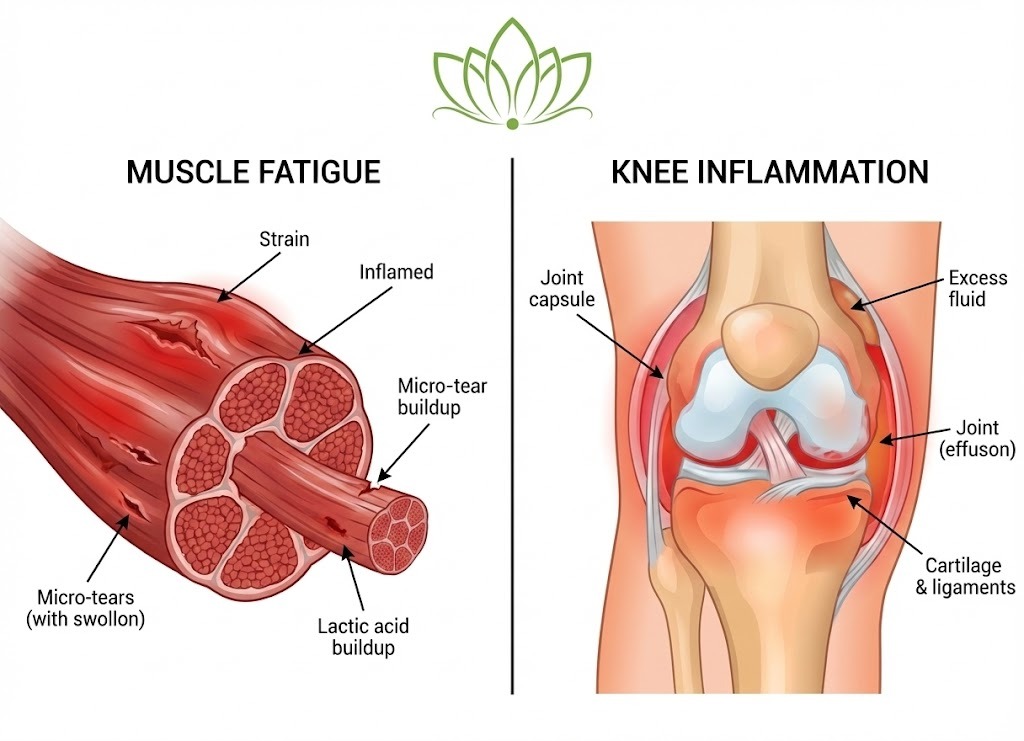
Muscle fatigue occurs when your muscles lose the ability to generate force. This is usually a temporary condition caused by vigorous exercise, physical labor, or even prolonged static postures. Biologically, it involves the depletion of energy reserves like glycogen and the accumulation of metabolic waste products such as lactic acid. Unlike the structural damage seen in joint issues, the Difference between muscle fatigue and joint inflammation starts here: fatigue is often a functional decline rather than a pathological injury. It is the body’s natural “brake system” to prevent overuse.
Key symptoms to spot
The primary sensation of muscle fatigue is a deep, dull ache often described as “heaviness.” You might feel a burning sensation during activity, known as the “pump,” which subsides shortly after stopping. Another hallmark sign is muscle weakness or trembling; for example, your legs might feel shaky after a long run. Delayed Onset Muscle Soreness (DOMS) can also occur 24 to 48 hours after activity, characterized by stiffness and tenderness to the touch within the muscle belly itself, not the joint.
Identifying joint inflammation
Joint inflammation, often referred to medically as arthritis or synovitis, is a more complex issue involving the connection points between bones.
What is joint inflammation?
Inflammation is the immune system’s response to irritation, injury, or infection within the joint capsule. This can affect the cartilage, lining, ligaments, or tendons surrounding the joint. Unlike the metabolic exhaustion of muscles, joint inflammation often involves structural stress or degeneration. Common causes include repetitive impact, autoimmune conditions like rheumatoid arthritis, or acute injuries like sprains. Recognizing this structural involvement is key to understanding the Difference between muscle fatigue and joint inflammation.
Distinctive pain characteristics
Pain from joint inflammation is typically sharper and more localized than muscle pain. It feels deeper, often described as being “inside the bone.” A defining characteristic is stiffness that is worse after periods of inactivity, such as waking up in the morning or sitting for a long time (the “gel phenomenon”). Unlike muscle fatigue, which improves with rest, inflammatory joint pain can sometimes feel worse when you are still and may improve slightly with gentle movement as synovial fluid lubricates the area.
Key differences compared
To make an accurate self-assessment, you need to compare specific aspects of how the pain presents itself and how your body reacts.
Pain location and duration
Muscle fatigue is usually diffuse, affecting a large area like the entire thigh or back. Joint inflammation is highly specific; you can often point to the exact spot on your knee, elbow, or knuckle that hurts. In terms of duration, muscle fatigue is transient, resolving within days with rest and nutrition. Joint inflammation can be acute (short-term from injury) or chronic (lasting months or years), often fluctuating in intensity but rarely disappearing completely without intervention.
Response to movement
This is perhaps the most practical test. Muscle fatigue generally hurts when you use that specific muscle group against resistance but feels better when relaxed. Joint inflammation, however, can limit your passive range of motion. If you cannot fully straighten your knee or bend your finger even with help, it is likely a joint issue. The joint may feel “locked” or produce clicking and grinding sounds (crepitus), which are not features of simple muscle fatigue.
Physical appearance signs
Visual cues are strong indicators. Muscle fatigue rarely causes visible changes unless there is severe cramping or a tear (bruising). In contrast, joint inflammation often presents with the classic signs of inflammation: redness, visible swelling (edema), and heat. If your knee looks puffy and feels warm to the touch, you are dealing with inflammation, not just a tired muscle. Observing these external signs is vital when determining the Difference between muscle fatigue and joint inflammation.
Treatment and recovery tips
Once you have identified the source of your pain, applying the correct treatment protocol is essential for rapid recovery.
Managing muscle fatigue
Rest and replenishment are the cures for fatigue. Focus on hydration and electrolyte replacement to help flush out metabolic waste. Consuming high-quality protein and carbohydrates helps repair muscle fibers and restock glycogen stores. Active recovery, such as light walking, foam rolling, or massage, can improve blood flow and reduce stiffness. Heat therapy (warm baths) is also highly effective for relaxing tight, fatigued muscles.
Treating joint inflammation
Inflammation requires a different approach, often summarized by the acronym R.I.C.E (Rest, Ice, Compression, Elevation) for acute flares. Cold therapy is preferred over heat to reduce swelling and numb nerve endings. Anti-inflammatory medications (NSAIDs) or natural supplements like turmeric can help manage the internal swelling. For chronic issues, low-impact exercises like swimming are recommended to keep the joints mobile without the high impact that exacerbates inflammation.
Conclusion
Distinguishing the Difference between muscle fatigue and joint inflammation empowers you to take better care of your body. While muscle fatigue is a natural consequence of exertion requiring rest and fuel, joint inflammation is a warning sign of structural stress requiring protection and management. By paying attention to the location, nature, and visual signs of your pain, you can avoid aggravating an injury and choose the right recovery method. Whether it is a warm bath for tired muscles or an ice pack for a swollen knee, listening to your body’s specific needs is the key to long-term health and mobility.
Contact Information:
Art Spa
Our Branches
Art Spa 1 – 37 Nguyen Phuc Tan St., Hoi An, Quang Nam
Art Spa 2 – 37/6 Le Quy Don St., Hoi An, Quang Nam
Email: artspahoian@gmail.com
Hotline: 0906 488 820
Website: Artspahoian.com
Opening hours: 10 AM – 10 PM