Picture this: You have just spent the last six hours wandering through the enchanting, mustard-yellow alleys of Hoi An’s Ancient Town. The colorful silk lanterns are beginning to glow against the twilight sky, the Thu Bon River is shimmering with floating candles, and the aroma of street food fills the air. It is a magical experience, but navigating those charming, uneven cobblestones all day inevitably takes a heavy toll on your feet.
Aching arches, swollen ankles, and overall foot fatigue can quickly drain your energy and ruin your travel itinerary if left untreated. What starts as a mild throb can turn into a blistered, exhausted reality that makes tomorrow’s planned bicycle ride to An Bang Beach feel more like a punishment than a vacation. When your feet hurt, your whole body feels the strain.
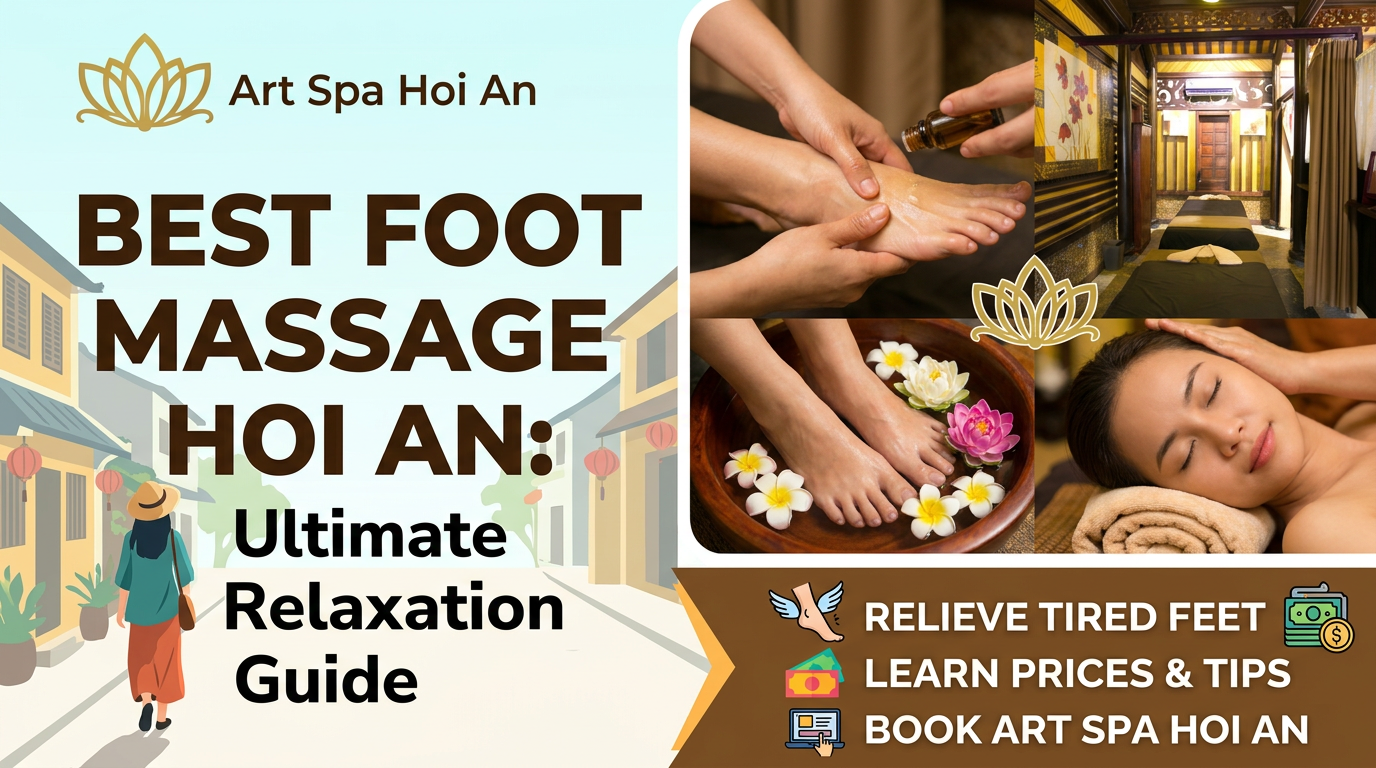
Fortunately, this historic city is renowned not just for its tailors and ancient architecture, but for its incredible wellness culture. Finding the perfect foot massage hoi an is the ultimate antidote to traveler’s fatigue. This comprehensive guide will walk you through exactly what to expect, average prices, insider tips, and how to choose the absolute best spa for unparalleled relaxation during your Vietnamese getaway.
1. The Benefits of a Relaxing Foot Massage After Exploring
Walking upwards of 15,000 to 20,000 steps a day is standard when exploring a pedestrian-friendly city like Hoi An. The physical demand this places on your lower extremities is immense. A professional foot massage goes far beyond simple pampering; it is a vital recovery tool that relieves acute pain, muscle tension, and joint stiffness caused by long hours of walking. The uneven surfaces of the Ancient Town force the tiny stabilizing muscles in your feet and ankles to work overtime. Targeted massage techniques help to break down lactic acid buildup in the calves and soothe the overstretched plantar fascia, providing immediate physical relief.
Beyond pain relief, a dedicated foot treatment dramatically improves blood circulation. Gravity, combined with the tropical Vietnamese heat, naturally causes blood and lymphatic fluid to pool in your lower legs. This is what causes the dreaded “traveler’s ankle” or swollen feet. By using upward strokes and specific pressure techniques, a skilled therapist manually pushes this fluid back toward the heart, effectively reducing swelling in the lower legs and ankles. You will literally feel your shoes fit looser and your legs feel lighter when you stand up.
Finally, the holistic benefits of the best foot massage hoi an cannot be overstated. The feet are packed with thousands of nerve endings. Stimulating these nerves calms the central nervous system, shifting your body from a state of “fight or flight” travel stress into “rest and digest” mode. This deep, systemic relaxation lowers cortisol levels, clears mental fatigue, and promotes significantly better sleep for the rest of your Vietnam trip. You will wake up the next morning feeling completely revitalized and ready to explore the My Son Sanctuary or the local coconut villages.
2. What to Expect During a Typical Foot Massage Session
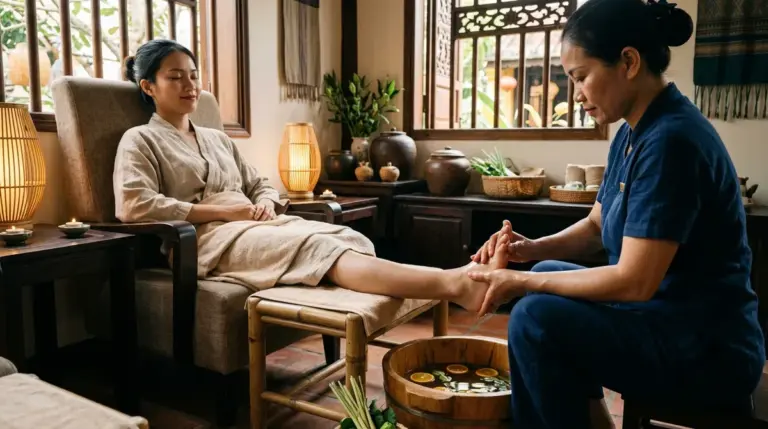
If you have never experienced a traditional Vietnamese foot massage, you are in for a multi-sensory treat. The experience is meticulously designed to soothe you from the moment you walk through the door. It almost always begins with a comforting welcoming ritual. You will be seated in a plush, reclining chair while your feet are gently submerged in a warm wooden basin. This isn’t just plain water; it is typically infused with a fragrant blend of traditional Vietnamese herbs, freshly sliced lemongrass, ginger, and sometimes lime or sea salt. This soak serves a dual purpose: it sanitizes the feet and uses natural aromatherapy and heat to soften the skin and relax tight muscles.
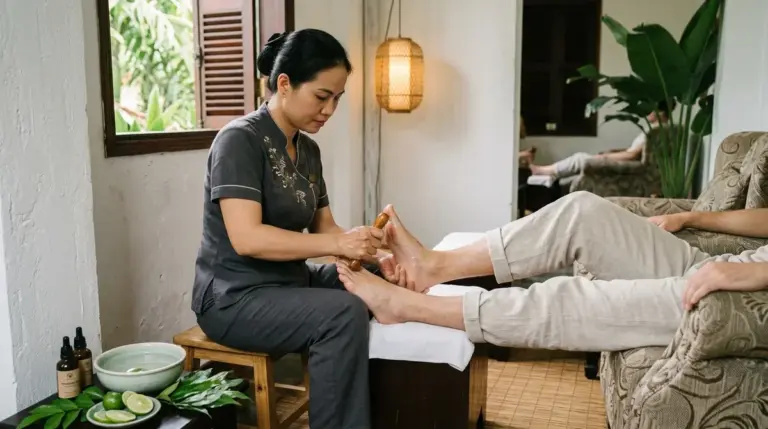
Once your feet are prepped, the core of the treatment begins. The massage techniques used in Vietnam are highly therapeutic. You can expect a dynamic combination of traditional foot reflexology hoi an, targeted acupressure, and deep tissue strokes. The therapist will use their knuckles, thumbs, and sometimes a smooth wooden stick to apply pressure to specific reflex points on the soles of your feet. According to reflexology principles, these points correspond to different organs and systems within the body. While they work the soles, they will also apply deep, sweeping strokes up your calves to release tension in the gastrocnemius and soleus muscles.
The experience doesn’t abruptly end when the foot work is done. The finishing touches are what elevate a good massage to a great one. The therapist will wrap your feet and lower legs in steaming hot towels, wiping away any excess massage oil while allowing the heat to deeply penetrate the relaxed muscles. While your feet are cocooned in warmth, you will often receive a complimentary light shoulder, neck, or head massage to melt away any lingering upper body tension. Finally, you are gently brought back to reality with a warm cup of herbal tea—often lotus or ginger—and a small local snack, leaving you completely grounded and refreshed.
3. How to Choose a Good Foot Massage Spa in Hoi An
With a spa seemingly on every corner of the Old Town, choosing the right one can feel overwhelming. To ensure you get a restorative experience rather than a disappointing one, your first priority should be the environment. Look for spotless cleanliness, hygienic equipment, and a calming, quiet atmosphere. A premium spa will use fresh linens for every guest, thoroughly sanitize their foot basins, and provide a tranquil escape away from the chaotic street noise of honking scooters and bustling crowds. If a spa looks dusty or smells musty from the doorway, it is best to keep walking.
The quality of your massage in Hoi An ultimately comes down to the hands performing it. It is crucial to ensure the spa employs certified, professional therapists. Street-side touts offering incredibly cheap rubs often employ untrained staff who simply apply lotion and rub your skin without any anatomical understanding. A professional therapist knows exactly how to locate muscle knots, understands the pathways of reflexology, and, most importantly, can adjust their pressure to your exact preference. Whether you need a gentle, soothing touch or intense, deep-tissue pressure to work out stubborn cramps, a trained professional will check in with you and adapt their technique accordingly.
Finally, in the digital age, there is no reason to walk into a spa blindly. Always check for authentic, recent customer reviews online before booking. Platforms like Google Maps and TripAdvisor are invaluable resources. Look for reviews that mention specific therapists by name, praise the cleanliness of the facility, and highlight the professionalism of the staff. Be wary of places with hundreds of five-star reviews that lack any written details, as these can sometimes be artificially inflated. Genuine traveler photos and detailed accounts of their experiences are the best indicators of a spa’s true quality.
4. Hoi An Spa Prices: How Much Does It Cost?
Vietnam is globally celebrated for offering incredible value when it comes to wellness, but prices can vary significantly depending on where you go. An overview of general hoi an spa prices for foot treatments reveals that a standard 60-minute session typically ranges from 250,000 to 450,000 VND (roughly $10 to $18 USD). Shorter 30-minute sessions might cost around 150,000 to 200,000 VND, while luxurious 90-minute treatments can stretch up to 600,000 VND. This provides a realistic estimate that easily fits into both backpacker budgets and luxury travel itineraries.
It is important to understand the difference between a cheap foot massage hoi an and a premium spa experience. You might spot open-air storefronts offering foot massages for as little as 100,000 VND ($4 USD). While tempting, these budget options often take place in crowded rooms with plastic chairs, minimal privacy, and therapists who may be chatting with each other throughout your session. In contrast, spending just a few dollars more for a luxury or boutique spa experience buys you a private, air-conditioned room, high-quality organic massage oils, soothing background music, and a highly trained therapist entirely focused on your well-being. The value you get for that slight price increase is monumental.
When evaluating prices, also consider what is typically included in the cost. Reputable spas do not nickel-and-dime their guests. The quoted price almost always includes the full welcoming ritual with the herbal foot soak, the use of premium oils or lotions, and complimentary post-massage refreshments like herbal tea, fresh local fruit, or yogurt. There are no hidden fees for the hot towels or the brief shoulder massage at the end. Understanding these inclusions helps you realize that you are paying for a comprehensive hour of hospitality, not just a physical service.
5. Best Time to Go & Essential Pre/Post Massage Tips
Timing your spa visit correctly can significantly enhance your overall experience. While a morning massage is a lovely way to start the day, the absolute best time to get a foot massage is in the late afternoon or early evening. After a long day of sightseeing, dodging bicycles, and shopping under the hot sun, your feet are at their most fatigued. An evening session acts as the perfect bridge between an active day and a relaxed night. It soothes the day’s aches, lowers your core temperature, and prepares you for a leisurely dinner along the riverfront or a deep, restful night of sleep.
To get the most out of your session, there are a few essential pre-massage tips to keep in mind. First, avoid eating heavy meals right before your appointment. Lying back in a reclining chair with a stomach full of rich local dishes like Cao Lau or Banh Mi can be quite uncomfortable. Opt for a light snack instead. More importantly, always communicate any injuries, skin sensitivities, or specific pain points to your therapist before they begin. If you have a blister from your sandals or a sprained ankle, letting them know ensures they can tailor the treatment to avoid causing any discomfort.
The care doesn’t stop when you leave the spa chair; post-massage practices are just as important. Deep tissue work and reflexology stimulate your muscles and release built-up metabolic waste and toxins into your bloodstream. Drink plenty of water over the next few hours to help your kidneys flush these toxins out of your system. Additionally, avoid strenuous walking immediately after your session. Don’t book a massage and then immediately embark on a two-hour walking tour. Give your freshly relaxed muscles the time they need to recover, and simply rest your feet.
6. Frequently Asked Questions About Foot Care in Hoi An
How much does a foot massage cost in Hoi An?
As a general rule, you can expect to pay between 250,000 and 450,000 VND (approximately $10 to $18 USD) for a high-quality, 60-minute foot massage in a clean, reputable spa. Budget options exist for less, and ultra-luxury hotel spas will charge more, but this mid-range sweet spot offers the best balance of professional technique and excellent value.
How long does a typical foot massage session last?
Spas typically offer treatments in increments of 30, 60, or 90 minutes. A 30-minute session is great for a quick refresh if you are short on time. However, a 60-minute session is the standard recommendation, as it allows the therapist enough time to properly soak the feet, work through all the reflexology points, and massage the calves without rushing. If your legs are severely fatigued, a 90-minute session offers the ultimate deep-tissue recovery.
Should I tip for a foot massage in Vietnam?
While tipping is not strictly mandatory in Vietnamese culture, it is highly appreciated and has become customary in the spa and service industry, especially in tourist hubs. If you enjoyed your service, a tip of 50,000 to 100,000 VND (about $2 to $4 USD) given directly to your therapist is a wonderful way to show your gratitude for their hard work.
Can couples or groups get a foot massage together?
Absolutely! Foot massages are a highly social and shared experience. Most quality spas feature dedicated group rooms equipped with multiple plush, side-by-side reclining chairs. This makes it a perfect afternoon activity for couples, families, or groups of friends who want to relax and chat quietly while receiving their treatments together.
Do I need to book my foot massage in advance?
During the peak tourist seasons (typically from February to May, and again in the summer months), booking in advance is highly recommended. The most reputable spas fill up very quickly, especially during the prime late-afternoon and evening slots. Sending a quick message via WhatsApp or Zalo a day in advance, or even earlier in the morning, secures your spot and prevents you from having to wander the streets looking for availability.
Conclusion
A professional foot massage is far more than just a vacation luxury; it is an essential part of the Hoi An experience. It offers much-needed physical relief for your overworked muscles and deep mental relaxation after a long day of walking through the vibrant, bustling streets of the Ancient Town. By choosing a reputable spa, understanding the techniques, and timing your visit perfectly, you can transform your travel fatigue into profound rejuvenation.
Treat your tired feet to the absolute best care in town by booking your session at Art Spa Hoi An (Branches 1 & 2). Known for our immaculate hygiene, highly certified therapists, and serene atmosphere, we are the premier destination for wellness in the city. Perfect for couples, groups, and solo travelers alike, we guarantee a rejuvenating experience that will leave you feeling lighter, deeply relaxed, and ready for your next adventure. Contact us today via WhatsApp, Zalo, or Call at +84 906 488 820 to reserve your spot and step into ultimate relaxation!