
Aromatherapy: The ultimate guide to healing with scents is your gateway to understanding one of the most powerful and ancient holistic healing modalities. In a world dominated by synthetic pharmaceuticals, the allure of harnessing nature’s essence to treat the mind, body, and spirit is stronger than ever. It is not just about making your home smell nice; it is a scientifically supported practice that influences the brain’s limbic system, regulating emotions, memory, and physiological functions. This comprehensive guide will walk you through the science, the most potent oils, and practical methods to integrate this therapy into your daily life for optimal well-being.
Understanding aromatherapy basics
To truly benefit from this practice, one must first grasp the biological mechanisms that allow volatile plant compounds to effect change in the human body.
How essential oils work
Essential oils are highly concentrated hydrophobic liquids containing volatile aroma compounds from plants. When you inhale these molecules, they travel through the olfactory nerves directly to the brain, specifically the amygdala, the emotional center. This is the core principle of Aromatherapy: The ultimate guide to healing with scents. Unlike other senses that are filtered through the thalamus, scent has a direct line to the brain, allowing for immediate psychological and physiological responses, such as lowering heart rate or triggering memory recall.
History of scent healing
The use of aromatic plants dates back thousands of years to ancient Egypt, China, and India. The Egyptians used oils for embalming and cosmetics, while the Chinese integrated them into traditional medicine. The term “aromatherapy” was coined in the 20th century by French chemist René-Maurice Gattefossé, who discovered the healing properties of lavender after burning his hand. Understanding this rich history validates the practice as a time-tested tradition rather than a fleeting modern trend.
Top healing essential oils
With hundreds of oils available, building a starter kit can be overwhelming. Focusing on versatile “powerhouse” oils is the best strategy for beginners.
Lavender for relaxation
Lavender is arguably the most famous essential oil, renowned for its sedative properties. Studies have shown that inhaling lavender can significantly reduce cortisol levels, alleviating anxiety and promoting deep sleep. It is a staple in any discussion regarding Aromatherapy: The ultimate guide to healing with scents for mental health. Its gentle nature also makes it one of the few oils that can be applied directly to the skin (neat) to treat minor burns and bug bites.
Peppermint for focus
If Lavender is the “calmer,” Peppermint is the “awakener.” Rich in menthol, this oil stimulates the mind, improves concentration, and fights mental fatigue. It is also a potent analgesic; applying diluted peppermint oil to the temples is a proven natural remedy for tension headaches. Its cooling sensation also aids in reducing fevers and soothing sore muscles after a workout.
Eucalyptus for immunity
Eucalyptus oil is a respiratory champion. Its strong, camphorous scent acts as a natural decongestant, breaking down mucus and clearing airways during colds or flu. It also possesses strong antiviral and antibacterial properties, making it an excellent choice for diffusing during the winter months to purify the air. Incorporating Eucalyptus is essential for those seeking physical healing through scent.
Methods of application
How you use the oils is just as important as which oils you choose. Different methods deliver the therapeutic compounds to different systems of the body.
Ultrasonic diffusion
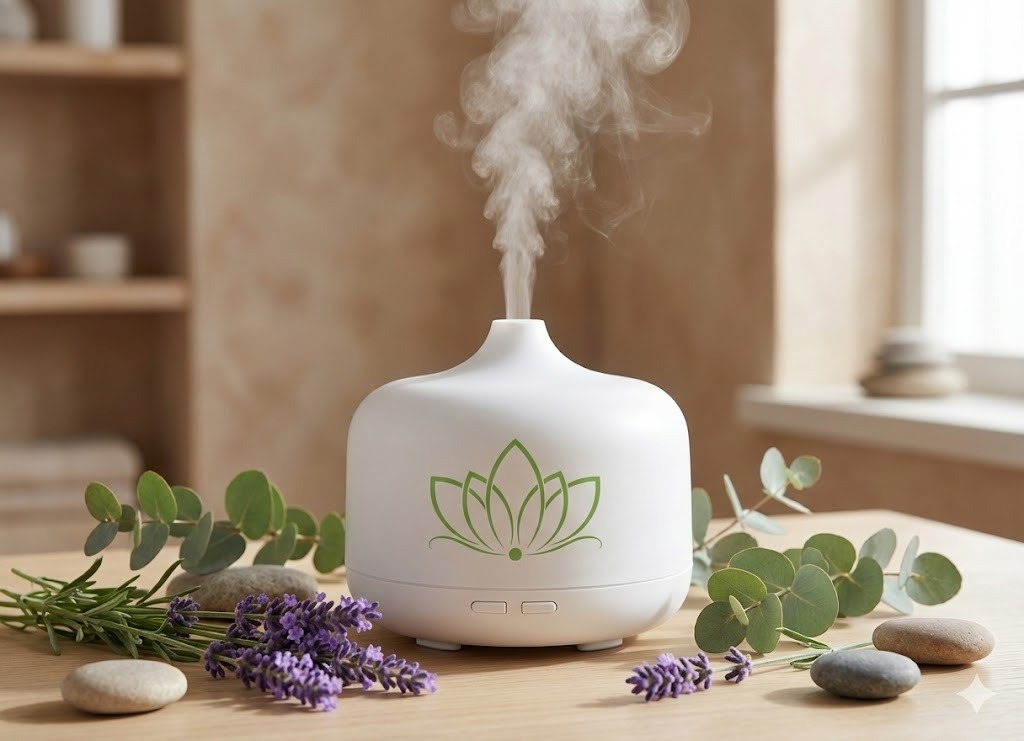
Using an ultrasonic diffuser is the most popular and safest way to practice aromatherapy. The device uses water vibrations to disperse a fine mist of essential oil into the air. This method is ideal for mood enhancement and air purification. It allows the molecules to be inhaled passively over a long period, making it perfect for creating a relaxing atmosphere in your bedroom or a focused environment in your office.
Topical application
Applying oils to the skin allows for absorption into the bloodstream. However, because essential oils are extremely potent, they must always be diluted with a carrier oil like jojoba, coconut, or almond oil. Common application points include the wrists, behind the ears, and the soles of the feet. This method is highlighted in Aromatherapy: The ultimate guide to healing with scents for treating localized pain, skin conditions, or for a sustained emotional grounding effect.
Direct inhalation
For immediate relief from acute stress or nausea, direct inhalation is effective. You can simply open the bottle and take deep breaths, or place a few drops on a tissue or in a steam bowl. This delivers a concentrated dose of aromatic molecules to the olfactory system. Personal inhaler sticks are also a convenient, portable option for carrying your therapeutic scents with you wherever you go.
Safety and best practices
While natural, essential oils are powerful chemical substances that must be treated with respect to avoid adverse reactions or toxicity.
Dilution guidelines
One of the most critical rules is proper dilution. A general guideline for adults is a 2-3% dilution for body massage (about 12-15 drops of essential oil per ounce of carrier oil). For facial application or for children and the elderly, a lower dilution of 1% or less is recommended. Ignoring these ratios can lead to chemical burns, sensitization, or allergic dermatitis.
Storage and quality
Essential oils are sensitive to light and heat, which can cause them to oxidize and lose their therapeutic value. Always store them in dark amber or cobalt glass bottles in a cool, dry place. furthermore, the market is flooded with synthetic fragrance oils sold as “essential oils.” To ensure you are practicing Aromatherapy: The ultimate guide to healing with scents effectively, always look for “100% pure therapeutic grade” oils and check for the Latin botanical name on the label.
Conclusion
Mastering Aromatherapy: The ultimate guide to healing with scents empowers you to take control of your health using the subtle yet profound power of nature. Whether you are diffusing lavender to banish insomnia, applying peppermint to crush a headache, or inhaling eucalyptus to breathe easier, you are tapping into a biological hack that humans have used for millennia. As you explore this aromatic world, remember to prioritize quality and safety. Start with a few core oils, experiment with blends, and discover how these botanical essences can transform your daily life into a journey of healing and balance.
Contact Information:
Art Spa
Our Branches
Art Spa 1 – 37 Nguyen Phuc Tan St., Hoi An, Quang Nam
Art Spa 2 – 37/6 Le Quy Don St., Hoi An, Quang Nam
Email: artspahoian@gmail.com
Hotline: 0906 488 820
Website: Artspahoian.com
Opening hours: 10 AM – 10 PM